
Amazon Seller Reinstatement Support (hereafter "we") is not an official Amazon contact channel and has no ownership or partnership relationship with Amazon. This article is for sellers of products such as power banks, sprays, perfumes or detergents whose products have gone into dangerous goods (hazmat) review, whose FBA sales have stopped, or who have received an email asking them to submit documents for their inventory.
To give the answer first: in a dangerous goods review, the basic step is to submit a Safety Data Sheet (SDS) or an exemption sheet by the set deadline when Amazon asks for one. According to official Help, products with complete and accurate information are reviewed within two business days. If inventory already at a fulfillment center is identified as potentially dangerous goods, you have up to 14 business days to submit the documents, and if you do not submit them within that period, the inventory is disposed of at the seller's expense. Products that use lithium-ion batteries also have separate requirements, such as PSE, UN38.3 and the state of charge during transport. The classification and any action taken are decided by Amazon.
This article is based on the Seller Central Help pages "Dangerous goods policy", "Notes on selling products that use lithium-ion batteries", "Requirements for lithium batteries and lithium battery-powered products", "Information and documents required for dangerous goods (hazmat)", "FBA dangerous goods review (Hazmat)", "Examples of products that may be dangerous goods" and "Maximum quantity limits for dangerous goods", checked on 19 October 2026. Screen names and requirements can change, so please also check the latest Help.
What we handle is preparing and revising submission drafts. You log in to your account and handle appeals and submissions to Amazon yourself.
Products that count as dangerous goods, and the seller's responsibility: what "shipper of record" means
According to the Help page "Dangerous goods policy", dangerous goods are products that contain flammable, corrosive or pressurised substances, or other substances that may harm health, and that may pose a risk during storage, handling or transport. The Help page "Examples of products that may be dangerous goods" gives examples such as the following for each category.
| Category | Examples of products that may be dangerous goods (from Help) |
|---|---|
| Electronics | Mobile batteries, mobile phones, chargers and batteries, speakers, smartwatches, wireless earphones, charging cases |
| Beauty and drugstore | Spray antiperspirants, hair sprays, hair colouring products, perfumes, insect repellents, nail polish |
| Health and household | Cleansers and cleaners, dishwashing detergents, laundry detergents, hand sanitisers |
| Automotive | Engine and tyre care products, oils, lead-acid batteries, airbags |
| Toys, hobbies and video games | Battery-powered toys, spray sets, controllers, wireless headsets |
When the seller is responsible
When the seller is the "shipper of record" for a shipment that contains dangerous goods, the seller is responsible for making sure that it complies with local and international transport regulations. The examples Help gives are sending products to an Amazon fulfillment center and shipping directly to buyers. When Amazon ships to buyers as part of FBA, the seller is not the shipper of record. Help says that violating dangerous goods regulations or this policy may lead to corrective action, such as suspension of seller-fulfilled or Amazon-fulfilled listings, or deactivation of the account.
How the dangerous goods review works: two business days and 14 business days
According to the Help page "FBA dangerous goods review (Hazmat)", products that may be dangerous goods are identified mainly from catalogue information (product description, specifications and photos), and each ASIN converted to FBA is reviewed. The deadlines and what to submit are as follows.

| Situation | Deadline or number of days (as stated in Help) | What to submit | If not submitted or information is missing |
|---|---|---|---|
| Listing a new product, or converting to FBA | Reviewed within two business days if the information is complete and accurate | Dangerous goods information (answers to the battery and dangerous goods questions), and a Safety Data Sheet or exemption sheet where needed | If the information is incomplete, inaccurate or contradictory, FBA sales may be stopped |
| A document was rejected, or more was requested | A further two business days from resubmission | A new Safety Data Sheet or exemption sheet | The review is not completed and the product is not classified |
| Inventory at a fulfillment center was identified as potentially dangerous goods (notified by email) | Documents must be submitted within 14 business days | A Safety Data Sheet or exemption sheet | If not submitted within the period, the inventory is disposed of at the seller's expense |
Business days are Monday to Friday, excluding public holidays. If you submit on a Saturday or Sunday, the count starts from Monday.
Main reasons a product goes into review
Help lists the following as reasons a product becomes subject to review.
- The product needs batteries to work, but no battery information was entered when the ASIN or product detail page was created
- The product detail page or buyer reviews mention batteries
- A product that may be dangerous goods (such as a screen cleaner or an aerosol) is included in the listed product or sold together with it
Help also says that changing catalogue information may require a new review.
Safety Data Sheets and exemption sheets: which to submit, and the conditions they must meet
Documents are submitted from "Manage Dangerous Goods Classification" in Seller Central, using "Upload documents". According to Help, the dangerous goods team reviews either document within two business days.
Conditions for a Safety Data Sheet (SDS)
The Help page "Information and documents required for dangerous goods (hazmat)" says that a Safety Data Sheet is a document of 16 sections prepared by the manufacturer or importer, and that it must meet the following conditions.
- It was created or updated within the past five years
- It includes current GHS/CLP hazard information
- The product name matches the product name in the listing (product detail page)
- The manufacturer or brand name matches the one shown on the product detail page
- All 16 standard sections are included
For sets or kits that contain several chemical products, a Safety Data Sheet is needed for each product included.
Products that can use an exemption sheet
An exemption sheet can be used only for the following two kinds of products, which do not need a Safety Data Sheet. Help says that submitting one for any other product leads to rejection.
- Batteries and battery-powered products
- Products that do not contain hazardous chemicals
For the exemption sheet, get the template from the right-hand side of "Manage Dangerous Goods Classification", fill in all the fields in red, and submit it as an Excel file. Submitting it in a format other than Excel may cause an error or a rejection.
Requirements for products that use lithium-ion batteries: PSE, UN38.3 and a 30% state of charge
The Help page "Notes on selling products that use lithium-ion batteries" says that products using lithium-ion batteries must comply with the following laws and regulations.
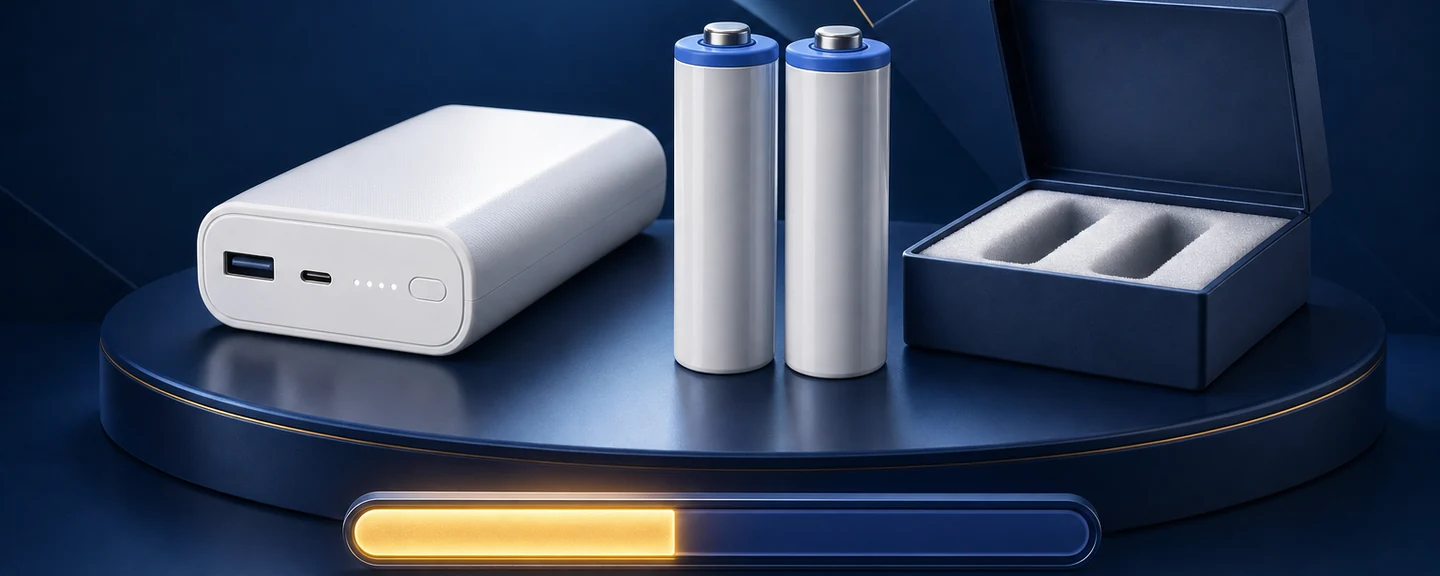
- Electrical Appliances and Materials Safety Act (PSE): power banks, some earphone charging cases, e-cigarettes and similar products are covered by PSE. From 1 February 2019, the PSE mark, business name, rated voltage and rated capacity must be shown on the product itself
- UN38.3: lithium batteries transported by air or sea must be of a type that complies with UN38.3. Amazon may ask for a UN38.3 test report where needed. All sellers are also required to upload a lithium battery test summary when setting up an ASIN
- State of charge during transport: batteries shipped on their own (UN3480) must be at 30% or less. For batteries packed with equipment (UN3481), 30% or less is mandatory from 1 January 2026. For batteries contained in equipment, keeping them at 30% or less, or at 25% or less of the indicated capacity, is recommended
When listing or updating, you need to provide state-of-charge information for lithium-ion batteries packed with equipment. Help says that if you do not answer the question on whether the state of charge is below 30%, the product is not eligible for air shipping.
How to check the Wh rating
A battery's energy (Wh) is shown on the battery itself, its packaging, or the manufacturer's documents. If it is not shown, it can be calculated from the nominal voltage (V) and rated capacity (Ah). Help warns not to confuse this with "input voltage", "output voltage" or "maximum charging voltage". In the Help table of energy ratings, the Japan column shows "Allowed" for every band. However, requirements such as PSE, UN38.3, state of charge, dangerous goods classification and quantity limits must be met separately.
Packaging and recall checks
As packaging recommendations, Help asks you to insulate terminals so they do not touch other batteries or metal, and to secure the product with cushioning to protect it from impact. It also lists checking the Consumer Affairs Agency recall information site and NITE SAFE-Lite before listing, at the time of receiving stock, and during regular inventory checks.
Action taken for violations, and when you disagree with the classification
According to Help, Amazon carries out its own test purchases and spot checks of FBA inventory, and if a violation is found, it takes action that can include deactivating the selling account. Help also says that when compliance or safety problems are confirmed from external reports or spot check results, Amazon may stop sales of the product or deactivate the account.
Help says that if you do not agree with the review result, you can submit a new Safety Data Sheet or exemption sheet that supports your position, or choose "Dispute classification" in "Manage Dangerous Goods Classification". How to prepare an appeal when an account or listing has been stopped is also covered in the article on product safety warnings and the article on restricted products.
When a quantity limit error appears in a shipping plan
Each fulfillment center has a maximum quantity for each type of dangerous goods. If a shipping plan exceeds the limit, an error appears. Help gives the following steps: reduce or remove the quantity of the SKU; for what you removed, create a separate shipping plan and check whether it can be sent to a different centre; and create a new plan at a later date for anything that still cannot be sent.
What we can do about dangerous goods reviews
Uploading documents, correcting listings and submitting disputes are procedures you carry out yourself from Seller Central. We do not log in to your account or send anything on your behalf.
What we help with is reviewing the emails you received and copies of your "Manage Dangerous Goods Classification" screen to sort out which documents to submit and by when, and preparing and revising the draft of the explanation for an appeal if your listings or account have been stopped.
The classification and whether sales resume are decided by Amazon, and we cannot promise an outcome. For cases we consider difficult, we tell you so before you engage us, to the extent known at that point.
Our fee is the same for every engagement: an initial fee of 80,000 yen plus a success fee of 80,000 yen (both including tax), paid by bank transfer. The initial fee is payable regardless of the outcome; the success fee is charged when the purpose of the engagement, such as reinstatement of the account, is achieved. If it is not achieved, no success fee is charged. Consultations are free, as often as you need.
Frequently asked questions
Q. How long does a dangerous goods review take?
A. Help says that products with complete and accurate information are reviewed within two business days (Monday to Friday, excluding public holidays). If a document is rejected or more is requested, it takes a further two business days from resubmission.
Q. I received an email asking for documents for my inventory. Is there a deadline?
A. Help says that if inventory already at a fulfillment center is identified as potentially dangerous goods, you have up to 14 business days to submit the documents, and if they are not submitted within that period, the inventory is disposed of at the seller's expense. Check the ASINs concerned and the documents requested in the email you received, and prepare a Safety Data Sheet or exemption sheet early.
Q. The manufacturer will not give me a Safety Data Sheet. What should I do?
A. Products that do not contain hazardous chemicals, and batteries and battery-powered products, can use an exemption sheet instead of a Safety Data Sheet. Other products need a Safety Data Sheet obtained from the manufacturer or supplier.
Q. I changed the product name and it went into review again. Why?
A. Help says that when catalogue information changes, a new review may be needed. When you change the product name, description or images, check that they do not conflict with the dangerous goods information or documents.
Q. What should I check to sell power banks through FBA?
A. Help lists the PSE mark and labelling, UN38.3 compliance and the test report, a state of charge of 30% or less during transport, battery information and the state-of-charge declaration when listing, packaging with insulation and cushioning, and checking recall information.
Summary
- In a dangerous goods review, you submit a Safety Data Sheet or exemption sheet. If the information is complete, the review is within two business days.
- If inventory at a fulfillment center is affected, you have up to 14 business days to submit the documents, and if they are not submitted, the inventory is disposed of at the seller's expense.
- A Safety Data Sheet must be within five years, have 16 sections, and match the product name and brand name. An exemption sheet is only for batteries and battery-powered products and products without hazardous chemicals, and is submitted as an Excel file.
- For products with lithium-ion batteries, check PSE, UN38.3 and a state of charge of 30% or less (mandatory for batteries packed with equipment from 1 January 2026).
- Violations can lead to suspension of listings or deactivation of the account. If you disagree with the classification, submit new documents or dispute the classification.
When you aren't sure about a dangerous goods review or a document deadline
We are not an official Amazon contact channel and have no ownership or partnership relationship with Amazon. You can send us the text of the email you received from Amazon, or your "Manage Dangerous Goods Classification" screen, on LINE (a screenshot is fine). We help you sort out which documents to submit and by when, and prepare and revise the draft of the explanation to send to Amazon. You log in to your account and handle appeals and submissions to Amazon yourself. The classification and reinstatement are decided by Amazon, and we cannot promise an outcome. Consultations are free, as often as you need.
Please do not send your login ID, password, or verification code.
 Free consultation, 24/7
*This article provides a general explanation. The appropriate response in individual cases depends on the circumstances.
Further reading
 Amazon product safety warnings: identifying products and checking supporting documents Read article →
 Responding to Amazon restricted-product warnings: checking listing restrictions and reviewing affected products Read article →
 FBA inventory during an Amazon account suspension: requesting returns or disposal, and storage fees Read article →